
 03 338 6869
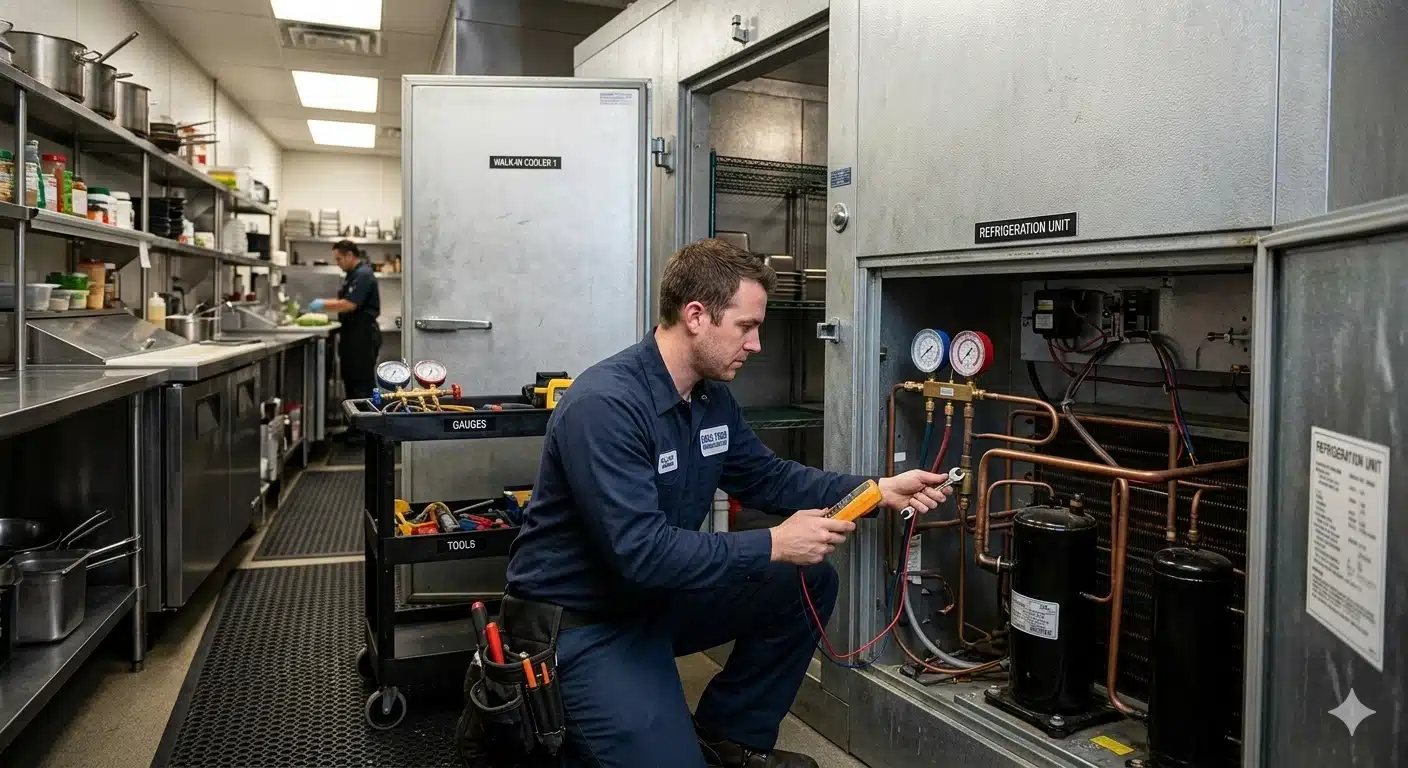

A warm cabinet, an iced-up evaporator or a freezer that keeps alarming can disrupt your business. Chillwell provides commercial refrigeration repairs and maintenance across Christchurch and Canterbury, drawing on 25 years of refrigeration and air-conditioning experience.
This guide covers warning signs in commercial fridges, coolrooms, freezers and specialist cooling equipment. A symptom can have several causes, so these checks are not a substitute for diagnosis.
Temperature rising or fluctuating
Check that doors close properly, stock is not blocking air outlets and the temperature setting has not been changed. Record the displayed temperature, any alarm code and when the problem started. Note recent deliveries or changes in loading. If temperature control is not being maintained, follow your site’s stock-protection procedure and arrange a service visit.
Possible causes include restricted airflow, sensor or control faults, defrost problems and refrigeration-circuit faults. Turning the setpoint lower will not repair an underlying fault.
Ice building up on coils or around doors
Excessive ice can restrict airflow and reduce cooling. Damaged door seals, frequent door opening, drainage problems or a faulty defrost system may be involved. Do not chip ice off an evaporator with sharp tools or use a flame to thaw it. A technician can identify the cause and advise on a suitable defrost and repair.
The unit runs continuously or struggles in warm weather
Blocked condenser airflow, dirty coils, higher product loads or worn components can increase running time. Keep the area around the unit clear and follow the manufacturer’s instructions for accessible cleaning. Cleaning that requires guards or electrical covers to be removed should be left to a suitably qualified technician.
Water leaks, damaged seals or unusual noise
Water on the floor may come from a blocked drain, condensation or another fault. Keep people clear of slippery areas and report the leak. Check accessible door seals for damage and doors for poor alignment. New vibration, rattling or repeated starting attempts should be investigated rather than ignored.
Refrigerant, compressor and electrical faults
Loss of cooling does not automatically mean the system needs more refrigerant. A technician should diagnose the fault and, where a leak is found, assess and repair it before restoring the correct charge. Compressor and electrical faults also require professional testing. Do not open electrical panels, bypass safety controls or repeatedly reset a tripping unit.
Freezers, blast freezers and low-temperature systems
These systems need to suit their product load and operating cycle. Longer pull-down times, repeated alarms or unusual ice formation deserve attention. Tell us whether the equipment stores frozen stock or freezes incoming product, along with the usual loading pattern. We also work on coolrooms and freezer rooms and water, glycol and process chillers.
Reduce avoidable faults with planned maintenance
A servicing programme can help identify developing faults, but cannot guarantee that equipment will never fail. Service frequency should reflect the equipment, environment and workload. See our commercial refrigeration care and maintenance guide for routine tasks and record-keeping.
Book a refrigeration assessment
Have the site address, equipment make and model, alarm codes and a short description of the symptoms ready. Photos of the nameplate and affected area can help. Call Chillwell on 03 338 6869 or send a service enquiry to discuss the next step.